How to Select the Right Commercial Roofing System for Twin Cities Flat Roofs
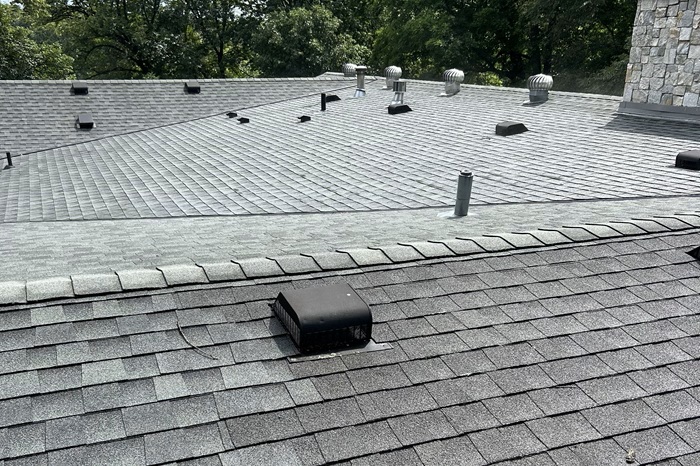
Choosing the right membrane for a flat commercial roof in the Minneapolis–Saint Paul climate means balancing long-term thermal performance, watertightness under heavy snow load, and resilience through repeated freeze–thaw cycles.
This article explains how to narrow material choices for Twin Cities facilities by looking at membrane chemistry, seam technology, detailing at penetrations and edges, and how these variables interact with cold-weather constructability and lifecycle maintenance.
We’ll also point you to technical considerations drawn from comparable projects and service pages related to commercial roofing, so your decision is grounded in field-proven practices rather than generic product claims.
Read on for an evidence-led, Twin Cities–specific breakdown designed for owners, facility managers, and specifiers who want durable assemblies without overpaying on first cost.
Performance of TPO, EPDM, & Modified Bitumen in Freeze–Thaw Conditions
TPO (thermoplastic polyolefin), EPDM (ethylene propylene diene monomer), and modified bitumen are the primary single-ply and multi-ply membranes used in the Midwest.
TPO provides excellent reflectivity and energy efficiency, but its thermoplastic seams can be vulnerable if welding quality is inconsistent during cold-weather installation.
EPDM’s flexible rubber composition remains pliable under sub-zero conditions, reducing stress at corners and penetrations.
Modified bitumen offers redundancy through multi-layer asphalt reinforcement, making it highly resistant to mechanical damage and ice damming common in Twin Cities winters.
In freeze–thaw cycles, the key differentiator lies in expansion tolerance and seam resilience. EPDM excels at accommodating contraction without cracking, while TPO’s laminated surface can delaminate under poor welding practices. Modified bitumen performs well in static freeze zones but can fatigue around parapets if insulation compresses unevenly.
Designers often select EPDM for longevity and flexibility, reserving TPO for energy-efficient, mechanically fastened systems on large, open decks.
Each system’s suitability depends on exposure and installation timing. For year-round projects, contractors prefer cold-applied modified bitumen or fully adhered EPDM due to fewer temperature restrictions during installation. TPO remains popular for reflective performance and compliance with energy codes.
Influence of Building Use on Roofing Membrane Selection
Occupancy type dictates internal moisture load, mechanical rooftop equipment density, and traffic exposure—all factors influencing membrane selection. Warehouses with minimal HVAC penetrations typically favor mechanically fastened TPO for cost efficiency.
Retail properties require aesthetics and energy performance, making white single-ply membranes preferable. Office buildings prioritize thermal continuity and noise dampening, where adhered EPDM assemblies deliver better acoustic insulation and air-tightness.
Mechanical and operational demands also affect deck choice and insulation type. For example, office structures often pair EPDM with polyisocyanurate insulation to achieve higher R-values.
Retail centers may use TPO for reflectivity that reduces cooling loads from large glass façades. Distribution centers lean toward durable modified bitumen due to forklift vibration transfer and higher mechanical impact risk.
Building classification aligns directly with long-term maintenance costs and lifecycle ROI. When selecting systems, specifiers must evaluate not only upfront costs but also repair access, occupancy disruption, and energy performance over a 20–30-year design life.
Drainage & Slope Requirements in Heavy Precipitation Regions
Flat roofs in the Twin Cities are designed with minimum slopes of 1/4 inch per foot to promote positive drainage. Failure to meet slope and scupper detailing requirements leads to standing water, ice formation, and accelerated membrane degradation.
Proper placement of tapered insulation systems, internal drains, and overflow scuppers is critical for code compliance under Minnesota Building Code Section 1507.
Membrane selection affects drainage efficiency. Smooth-surfaced TPO and EPDM reduce friction, allowing meltwater to clear rapidly. Modified bitumen, while durable, may hold residual moisture between plies if surface irregularities develop.
Designers often integrate sump pans and cricket configurations around HVAC curbs to minimize ponding at structural low points.
Hydrostatic pressure from freeze–thaw expansion increases load on insulation facers and fasteners. Incorporating redundant drainage pathways reduces long-term damage and preserves warranty conditions.
Each manufacturer’s technical data sheet specifies slope tolerances and fastening patterns, which should be strictly followed during the design and installation phases.
Role of Roof Insulation (R-Value) in Cold Climates
Thermal resistance under commercial membranes directly affects condensation control, interior comfort, and energy use intensity (EUI). Minnesota’s climate zone (Zone 6A) mandates a minimum R-30 for commercial low-slope roofs under ASHRAE 90.1.
Polyisocyanurate (ISO) remains the most common insulation due to its high R-value per inch (~R-6.5), but performance can drop at sub-freezing temperatures, where extruded polystyrene (XPS) maintains stable thermal resistance.
Continuous insulation layers minimize thermal bridging at fasteners and joints. In adhered systems, cover boards improve dimensional stability under heavy snow loads.
Designers must consider dew point migration to prevent condensation at the membrane–insulation interface. Vapor retarders are often installed directly above the deck to prevent moisture diffusion from interior spaces such as offices or kitchens.
Roof insulation not only improves efficiency but also enhances durability by moderating temperature fluctuation across the membrane. Higher R-values reduce expansion–contraction stress cycles, extending the service life of EPDM and modified bitumen systems.
Maintenance Variations Between Roofing Systems
Each roofing membrane requires distinct inspection and maintenance routines. TPO and PVC membranes demand regular seam inspection to detect heat-weld degradation.
EPDM requires lap sealant touch-ups and puncture monitoring, while modified bitumen needs granule surface replenishment and flashing reseal work after severe weather events.
Proper documentation of annual maintenance preserves manufacturer warranties and aids capital planning.
Snow removal techniques vary by system. TPO and EPDM can tear under shovel impact if not adequately protected. Modified bitumen tolerates scraping better due to the asphalt surfacing. Chemical de-icing agents should be avoided on all membranes due to potential polymer breakdown.
Drain strainers, scuppers, and internal leaders must remain clear to prevent freeze blockage that could compromise parapet integrity.
Over time, maintenance data informs asset management decisions. Facilities that maintain inspection intervals under six months demonstrate up to 30% longer service life compared to reactive maintenance approaches.
Proper preventive care aligns with warranty provisions offered by contractors such as Pudas Construction and maintains compliance with ASTM D4434 and D4637 standards.
How Pudas Construction Supports Durable Flat Roof Systems
Pudas Construction provides end-to-end roofing system specification, installation, and inspection services throughout Minnesota. Our experience with TPO, EPDM, and modified bitumen systems extends from retail plazas to industrial warehouses, emphasizing long-term reliability in harsh winter conditions.
Located in the Twin Cities, Pudas Construction offers consultative evaluations that integrate material selection, drainage optimization, and thermal performance modeling. Call our experts at 612-481-3053 for detailed assessments. For direct inquiries or project estimates, contact us online.
All system recommendations are designed to maximize roof longevity, lower lifecycle costs, and maintain compliance with Minnesota code requirements. Each service is tailored to the region’s freeze–thaw conditions and precipitation demands to provide clients with dependable, high-performance roofing assemblies backed by decades of local expertise.