Storm Damage Roof Inspections: What to Expect & How to Prepare
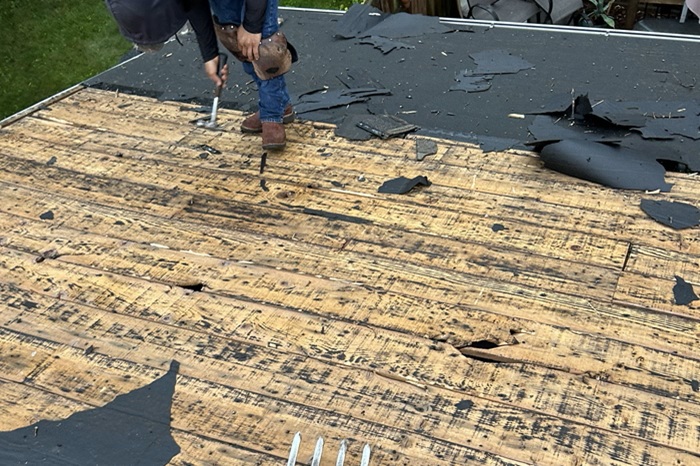
After a severe storm, homeowners often face uncertainty about the true condition of their roofs. A professional inspection is the first and most important step in identifying the full scope of damage and preventing costly long-term issues.
This article explains what to expect during a storm damage roof inspection, how to prepare for it, and what actions can protect your investment. Storm damage can lead to hidden leaks, compromised shingles, and structural risks that aren’t always visible from the ground. Understanding the inspection process helps ensure every issue is documented accurately.
We’ll also address the most common questions homeowners ask during inspections. Pudas Construction’s expertise in storm restoration provides the foundation for a comprehensive look at each of these areas.
What Documentation Should You Take Before & During Inspection?
Before the inspection, homeowners should capture clear, date-stamped photos of their roof, gutters, siding, and yard from multiple angles. These pre-storm and post-storm images create an objective record that supports insurance claims and helps inspectors identify changes.
Photos should include wide shots of the entire roof, close-ups of suspected damage areas, and any visible debris or dents on gutters and downspouts. Consistent lighting and perspective are key for comparison.
During the inspection, document every identified issue. Inspectors typically photograph cracked shingles, displaced flashing, bruised granules, and punctures caused by hail or debris.
Supplement these images with written notes detailing the location and severity of each issue. If interior leaks or water stains exist, include corresponding ceiling and attic photos to connect the evidence. Detailed documentation helps differentiate between isolated repairs and system-wide damage requiring full replacement.
Digital folders labeled by date and section—eaves, ridges, valleys—simplify claim review and contractor assessment. Reference guides from storm damage experts recommend maintaining both printed and cloud-stored copies to preserve records if physical devices are damaged.
Which Roof Zones (Eaves, Ridge, Valleys) Are Most Vulnerable to Wind or Hail Damage?
Roof zones vary in exposure and susceptibility to storm forces. The eaves and ridgelines are typically the most vulnerable to high winds, as these areas experience the greatest uplift pressures.
Shingles near the eaves often lift or tear, allowing water intrusion during heavy rainfall. Ridges, being the highest point of the structure, sustain direct impact from hailstones and debris.
Valleys, where two roof planes meet, channel water flow and are prone to material wear. Damage in these zones often appears as granule loss, cracks in flashing, or dented metal components.
During inspection, roofers analyze the pattern of hail impacts across these zones to estimate wind direction and storm intensity. This diagnostic approach supports accurate assessments and helps distinguish between cosmetic and functional impairment.
Documentation of high-risk areas is emphasized in storm damage inspections to verify whether damage meets insurance claim thresholds and to determine appropriate repair strategies.
When Is a “Walk-On” Inspection Safe vs Using Drones or Lifts?
“Walk-on” inspections provide tactile evaluation of shingle flexibility, adhesion, and underlayment integrity, but safety and roof condition dictate their feasibility.
Roofs with steep slopes, extensive granule loss, or wet surfaces are unsafe to traverse. In these cases, inspectors rely on drones or lift-assisted examinations. Drones equipped with high-resolution cameras and thermal sensors can capture precise imagery without risking structural damage or personal injury.
Professional inspectors evaluate access points, load-bearing capacity, and weather conditions before walking on a roof. Lightweight footwear and distributed weight techniques help minimize additional damage.
When drones are used, imagery can be analyzed in real time or later in detail to measure hail indentations and detect thermal anomalies that indicate moisture beneath the surface.
Drone data complements manual inspections by providing aerial context and cross-referencing with on-site findings, resulting in a more complete damage profile while maintaining safety standards.
How to Distinguish “Repairable Damage” vs “Total Loss” in an Inspection Report?
Inspection reports distinguish repairable damage from total loss through a combination of visual evidence, material performance data, and structural evaluation.
Repairable damage typically includes limited shingle fractures, localized granule loss, or isolated flashing defects that do not compromise roof integrity. These issues can often be resolved through sectional replacement and sealing.
Total loss conditions arise when the roof system’s waterproofing capability is compromised across multiple sections. Indicators include widespread shingle bruising, substrate exposure, and alignment failure. The inspector reviews age, prior repairs, and cumulative storm impact to determine if patching is economically or structurally viable.
Comprehensive reporting ensures insurers receive clear justification for either partial repair approval or full replacement authorization. Advanced diagnostic tools—such as moisture mapping and core sampling—further support accurate classification, protecting both property value and claim validity.
What Roles Do the Inspector, the Homeowner, & the Insurance Adjuster Each Play in the Process?
The inspection process relies on collaboration between three primary participants: the inspector, homeowner, and insurance adjuster.
The inspector performs the technical evaluation, capturing photographic evidence, recording measurements, and identifying storm-related damage patterns consistent with meteorological data. They provide an impartial assessment that informs both repair strategy and claim submission.
The homeowner’s role centers on access, communication, and record-keeping. They ensure inspection readiness by clearing debris, documenting pre-existing issues, and maintaining photo records. They also review findings with both the inspector and insurer to confirm understanding of recommendations and estimated costs.
The insurance adjuster uses the report to validate claim legitimacy and determine coverage based on policy terms. Their assessment reconciles contractor estimates with documented damage.
Coordination between all three parties expedites resolution and guarantees transparency throughout the restoration process.
Expert Assistance from Pudas Construction
Pudas Construction provides comprehensive storm restoration services across Minnesota, combining technical expertise with transparent communication. Our team specializes in roof inspection, repair, and replacement following severe weather events.
With advanced diagnostic tools and insurance claim experience, we ensure homeowners receive accurate evaluations and lasting solutions. For professional help, reach out at 612-481-3053 or visit our contact us page for consultation. Headquarters located in Minnesota, Pudas Construction stands as a trusted authority in storm restoration excellence.